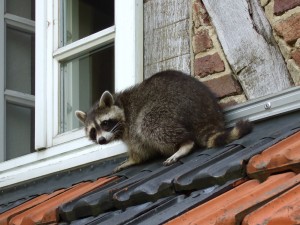
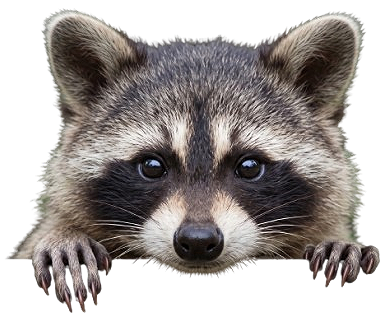
Heavy footsteps over the bedroom after midnight, a soffit panel hanging loose, a trash can knocked over every night: raccoons are hard to ignore once they decide your property is home. Quick Catch provides humane raccoon removal for homes and businesses across Duval, Clay, St. Johns and Nassau counties. We trap the raccoons, including any young, take native animals to release sites where we have written permission, and seal the openings they used. Call 904-859-6585 to set up a visit.
Locally Owned & Operated
Humane Animal Removal
Licensed & Insured
One-year warranty and satisfaction guarantee
Hours: Office 8 am to 5 pm | After-Hours 5 pm to 9 pm for Emergency Calls
Not sure a raccoon is the animal overhead? Our attic animal removal page compares the sounds and signs of every common attic invader.

The Florida Fish and Wildlife Conservation Commission (FWC) describes raccoons as common throughout the state wherever trees offer the cavities they use as dens, usually near reliable water, and common in urban areas (FWC raccoon profile). They eat fruit, plants, eggs, crustaceans, small animals and garbage, and they are mostly active from late afternoon through the night.
That fits Jacksonville well. The St. Johns River, the Intracoastal Waterway and countless retention ponds keep water close, and mature live oaks offer hollow limbs and branches that reach right over the roof. An attic is simply a drier tree cavity.
Quick Catch’s Jacksonville Wildlife Calendar tracks the local rhythm. Raccoons start working rooflines, vents and chimneys in February as nesting season nears, and May is the peak month for mothers raising young indoors. A mother raccoon will not leave until her babies can survive on their own, which can take weeks or even months. September storms loosen soffits and vents, and from October through December cooler nights push raccoons back toward attics and crawl spaces.
Raccoons can catch canine distemper, a viral disease that also infects foxes, skunks and unvaccinated dogs, but not humans. A sick raccoon may have runny eyes and nose and a rough coat, and may stumble as if drunk. Because the symptoms resemble rabies, keep children and pets away and call us; Quick Catch removes sick, distemper and rabid raccoons.

Please do not board up the hole first. If the mother is outside when you close it, her young are trapped inside and she will tear a new opening.
Relocation rules. Under FWC rule 68A-9.010, a trapped nuisance animal must be released or humanely euthanized within 24 hours. A native animal can be released off the capture property only on land of at least 40 contiguous acres in the same county, with the landowner’s written permission (Florida Administrative Code; FWC: Relocating Wildlife).
Rabies. The Florida Department of Health names raccoons and bats as the main wildlife sources of rabies in Florida. If a raccoon bites or scratches you, wash the wound with soap and running water for 5 to 10 minutes and contact your doctor and county health department right away (Florida Department of Health).
Raccoon roundworm. People, most often children, can be infected by accidentally swallowing roundworm eggs from raccoon droppings. Eggs in fresh droppings take 2 to 4 weeks outdoors to become infectious, so prompt, careful removal of latrines lowers the risk (CDC).
The price depends on how many raccoons there are and whether babies are present, where they are (attic, crawl space or yard), how many entry points need sealing, roof height and pitch, insulation cleanup, and whether you need an after-hours visit.
For national background, 2026 cost guides put raccoon removal at about $400 to $600, rising to around $750 when a nest of young is involved, and typical wildlife removal at about $198 to $635 (HomeGuide; HomeAdvisor). Quick Catch never prices a job before we have seen it in person, so treat these national figures as general background, not a quote for your home.
Wildlife estimates are a paid service. Military members and first responders receive a 10% discount, and we accept cash, checks, Visa, Mastercard and American Express.
“Over a one year period, Quick Catch helped us control a serious raccoon problem. They: Responded quickly to calls and had traps in place within hours … Released animals in a safe, remote location, a better place for them to be … We were entirely satisfied with the service provided and would recommend Quick Catch to anyone who needs wild animals removed from their property.”
Barbara & Bob Nelson, Ponte Vedra Beach, FL
“I could not have been happier with the services your company provided … My daughter and I learned a lot about invasive species and lots of other animals. But more importantly, he really put my mind (and heart) at ease about the raccoons he had to relocate.”
Lisa, San Marco, Florida
Remove what attracts them, then remove the raccoons and close the way in. Secure garbage, bring pet food inside and trim limbs off the roof. Raccoons already in the attic or crawl space need to be trapped, young included, and the entry points sealed. Florida law limits where a trapped raccoon can be released.
Heavy walking at night points to a raccoon. Do not go into the attic to look, and do not seal the hole, because a mother may have young inside. Call 904-859-6585 and we will identify the animal, trap it and its babies, and seal the opening.
National 2026 guides put it around $400 to $600, or up to about $750 with a nest of young. Your price depends on the number of raccoons, babies, entry points and cleanup. We price each job after seeing it in person.
Native animals we catch go to one of our relocation spots where we have written permission to release them, far from your home, as FWC rules require.
Not always. A mother feeding young may forage in daylight. A raccoon that stumbles, circles, looks thin or has discharge from its eyes and nose may have distemper or rabies. Keep children and pets inside and call us.
Rats, squirrels and raccoons removed from your attic, with soiled insulation removed if necessary.
Whole-home intrusion prevention with up to a lifetime warranty and a certificate.
Cleanup and repair of damage caused by animals, paired with intrusion prevention.
We provide raccoon removal throughout Duval County, Clay County, St. Johns County and Nassau County. Wooded, waterfront neighborhoods keep us busy in Ponte Vedra, Arlington, Orange Park and Fernandina Beach. See all of our service areas.
Heavy footsteps overhead or a torn soffit? Call before a mother raccoon settles in to raise her young. We will trap the raccoons, relocate them legally and seal your home. Call 904-859-6585 to schedule raccoon removal.